Concentric is monitoring escalating youth-led unrest in Europe, after more than half a million people protested across France on October 17 and anti-government riots in Albania entered a fifth day, with rioters targeting government buildings and businesses in both countries. We are also tracking a surge in attacks on commercial shipping near the Strait of Hormuz, as the U.S. military prepares strike options against Iran ahead of the November 3 midterm elections. Finally, we are assessing the reach of Mexican cartels, after authorities in Morelos released a captured cartel leader in exchange for three kidnapped officers, highlighting how quickly criminal groups can disrupt local security.
Youth-Led Unrest Turns Violent Across Europe
Youth-led anti-government protests turned violent in several European countries this week. In France, authorities counted 550,000 protesters nationwide on October 17, including 110,000 in Paris. Students began the movement in mid-September over crumbling schools and teacher shortages, and labor unions, parents, and remnants of the 2018 Yellow Vest movement have since joined over rising living costs. Demonstrators breached Marseille’s town hall and looted shops, and rioters set fire to a tourism office in Lyon. In Limoges, rioters forced their way into the historic town hall and set it ablaze, causing its spire to collapse. Police arrested at least 400 people, and looters targeted luxury boutiques and supermarkets in several cities. The unrest coincides with a debt crisis that has pushed France’s borrowing costs to their highest level in 24 years ahead of a critical budget vote. In Albania, anti-government riots in Tirana entered a fifth day on October 17 after high school and university students joined a months-long movement demanding Prime Minister Edi Rama’s resignation. Protesters threw rocks, molotov cocktails, and fireworks at police near the prime minister’s office, set cars on fire, and attacked government offices. Police reported 167 arrests and 132 officers injured over five days. Young activists also led solidarity protests in Belgium and Italy on October 17. We advise organizations with offices, retail locations, or traveling personnel in France and Albania to expect further large and potentially violent protests, particularly around France’s budget vote, and to monitor announced protest dates and routes. Further spread to other European cities is possible, as youth-led protests have gathered quickly through social media. Retail and hospitality businesses in affected city centers should prepare to close early and secure premises on protest days, and personnel should avoid town halls and government buildings, which rioters targeted this week.
Attacks on Shipping Surge Near Hormuz as U.S. Prepares Strike Options
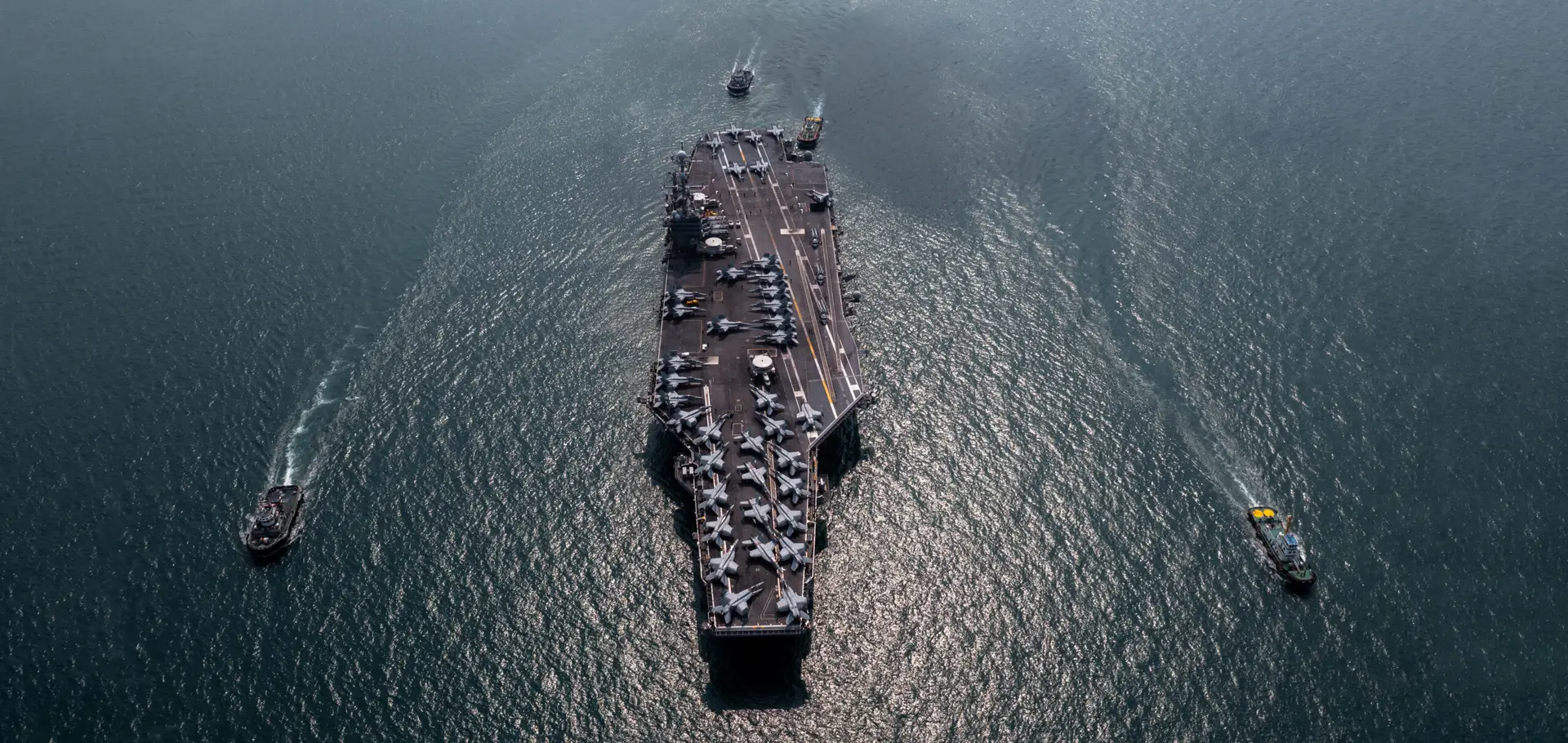
Iran targeted at least 24 commercial vessels near the Strait of Hormuz over a two-week period, according to the Institute for the Study of War. The U.K. Maritime Trade Operations (UKMTO) reported at least seven further incidents between October 12 and 14 and said October has become the busiest month for reported attacks on ships in the area. Two cargo ships sank and a tanker caught fire in attacks near the strait this week. A U.S. military official said Iranian naval forces now use small boats and spotters to find targets after U.S. strikes damaged their radar systems. CNN reported on October 15 that the U.S. military has drawn up new strike plans against Iranian energy infrastructure and nuclear sites. The plans include the possible use of the Massive Ordnance Air Blast bomb, the most powerful conventional bomb in the U.S. arsenal, and President Trump did not dismiss the reports. Two U.S. aircraft carriers are operating in the Arabian Sea, with a third, the USS Theodore Roosevelt, still en route. Iranian commanders warned that any attack would bring retaliation against Israeli and allied targets. A senior Iranian security official added that U.S. data centers and artificial intelligence infrastructure would be within range. Tehran said this week it would reopen the strait if Washington accepts the conditions in its seven-day ceasefire proposal. We advise organizations with cargo moving through the Gulf to plan for continued attacks on shipping and longer transit times through the end of the year, and to confirm cargo and war-risk insurance coverage with their carriers. Concentric assesses the risk of renewed U.S. strikes and Iranian retaliation across the Gulf will likely rise around the November 3 midterm elections. Organizations with personnel in the region should review evacuation and shelter-in-place plans before that date.
Mexican Authorities Release Cartel Leader After Gunmen Seize Officers
Authorities in the central Mexican state of Morelos released José David Vergara, known as El Güero Gym, a leader of the Pueblos Unidos criminal group, in exchange for three prosecutor’s office agents his associates had kidnapped. State officers detained Vergara on October 12 in the town of Totolapan, in northern Morelos, while carrying out an unrelated property seizure. Gunmen linked to the group responded by blocking access to the town, burning vehicles, and firing shots. They seized three agents, one of whom suffered a gunshot wound, and demanded Vergara’s release in exchange. The Morelos prosecutor’s office said officers had detained Vergara for simple possession of a narcotic, an offense that does not require mandatory pretrial detention under Mexican law. It said the release was therefore lawful because he had no outstanding arrest warrants, and it has opened an aggravated kidnapping investigation into at least ten people, including Vergara. Mexico’s top security official, Omar García Harfuch, said the arrest was a chance encounter rather than a planned operation and that state authorities were overwhelmed by the group’s response. President Claudia Sheinbaum defended the decision as necessary to protect lives, and both officials said authorities would recapture Vergara. Mexican security analysts compared the incident to the 2019 episode in Culiacán, when the government released a son of Joaquín Guzmán after the Sinaloa Cartel overran the city, and said it signals institutional weakness. Elsewhere this week, federal forces seized 48 drones, six landmines, and 36 homemade bombs in Sinaloa, and the U.S. Treasury Department sanctioned four people and 11 businesses tied to the Cartel del Noreste. We advise organizations with operations or traveling personnel in Mexico to recognize that cartels can paralyze local areas within hours in response to arrests, and that state authorities may lack the capacity to respond. Companies should track arrests of regional criminal leaders near their sites and prepare alternate routes and shelter-in-place options for roadblocks. Personnel should avoid nonessential road travel in rural parts of Morelos and Sinaloa during periods of unrest.