Panama Reassigns Port Operations Amid U.S.-China Pressure:
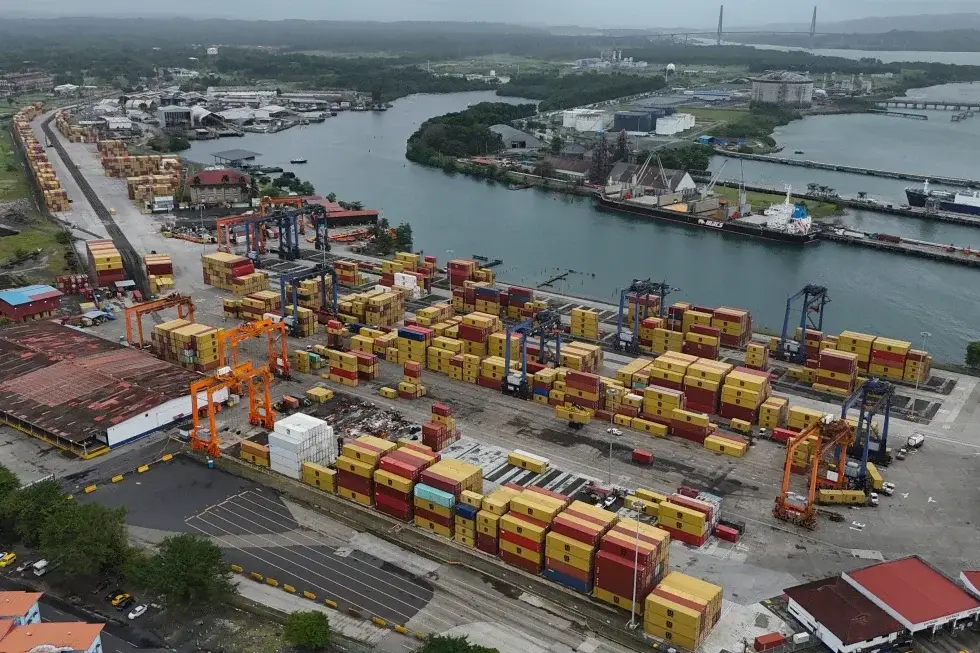
Panama abruptly cancelled a long-term port concession held by Hong Kong-based multinational CK Hutchinson Holdings at the Balboa and Cristóbal terminals, which sit at the Pacific and Atlantic entrances of the Panama Canal, citing national security and sovereignty concerns. Authorities have since moved to transfer operations to Denmark’s logistics group A.P. Moller Maersk, prompting CK Hutchinson to warn of possible legal action over the termination of its contract. The decision follows intensifying U.S. scrutiny of Chinese-linked commercial activity in strategic infrastructure across the Western Hemisphere and reflects broader efforts by Panama to rebalance foreign investment with geopolitical alignment. The sudden shift has created uncertainty around transition timelines, compensation and operational continuity at two of the world’s most critical transshipment hubs. The move demonstrates how the U.S.-China competition is increasingly influencing infrastructure governance in key global chokepoints, raising the risk of sudden regulatory ownership changes for foreign operators. Disruption or legal disputes at Panama’s main ports could ripple across trans-Pacific and trans-Atlantic supply chains, increasing transit costs, delaying cargo movements, and encouraging governments elsewhere to reassess foreign control of strategic assets..
We advise executives in shipping, logistics, commodities, and manufacturing to reassess dependence on Panama Canal-linked ports, diversify routing and transshipment options, and factor political intervention risk into account. Companies should also review exposure to concession and regulatory risk in geopolitically sensitive locations and strengthen contingency planning for sudden changes in port access or management.
U.S. Deploys Second Aircraft Carrier to the Middle East as Tensions with Iran Persist:
The U.S. ordered the deployment of a second aircraft carrier, the USS Gerald R Ford, to the region to join the USS Abraham Lincoln amid mounting tensions with Iran, in a move that underscores Washington’s potential readiness to employ military pressure while simultaneously continuing diplomatic engagements. President Trump publicly linked the buildup to negotiations with Tehran and warned of “very traumatic” consequences if a deal is not reached, while also suggesting regime change in Iran “would be the best thing that could happen” as part of a broader approach to countering Iran’s strategic ambitions. This latest deployment extends the current period of heightened regional uncertainty and reinforces the pattern of sustained military signaling in parallel with fragile diplomacy. For global markets, the continuation of U.S. naval forces in the Gulf increases the probability of prolonged price volatility and insurance cost spikes if tensions persist or escalate.
We advise executives and organizations with existing exposure in the Middle East should now reassess escalation and disruption scenarios already in place, with particular attention to maritime transit, energy supply continuity, and staff mobility. Executives should ensure crisis-response frameworks remain active, monitor changes in airspace and port security conditions, and maintain flexibility in routing, procurement, and travel planning as the standoff continues to evolve.
Uncertainty in U.S. Cyber-Intel Law Erodes Private-Sector Trust:
Uncertainty regarding the renewal of the Cybersecurity Information Sharing Act (CISA) of 2015, a legislation to encourage private-sector sharing of cyber threat intelligence with federal authorities, is undermining confidence among private sectors about collaborating with the U.S. government on cyber defense, as extensions of the law continue without long-term clarity on protections and liability safeguards. This legal uncertainty is making firms more reluctant to disclose detailed attack data, weakening a core mechanism for national cyber resilience and potentially leaving threats undetected or unshared at a time when state-sponsored and criminal cyberattacks are increasingly sophisticated and pervasive. For Western businesses, particularly for those operating across borders or in critical infrastructure sectors, the erosion of trust in public-private cyber collaboration can mean slower threat response, reduced situational awareness, and heightened exposure to advanced persistent threats.
We advise executives to conduct internal reviews of incident reporting policies and engage advice to understand current protections under CISA extensions, while also investing in threat sharing frameworks and partnerships with private-sector threat intelligence organizations.