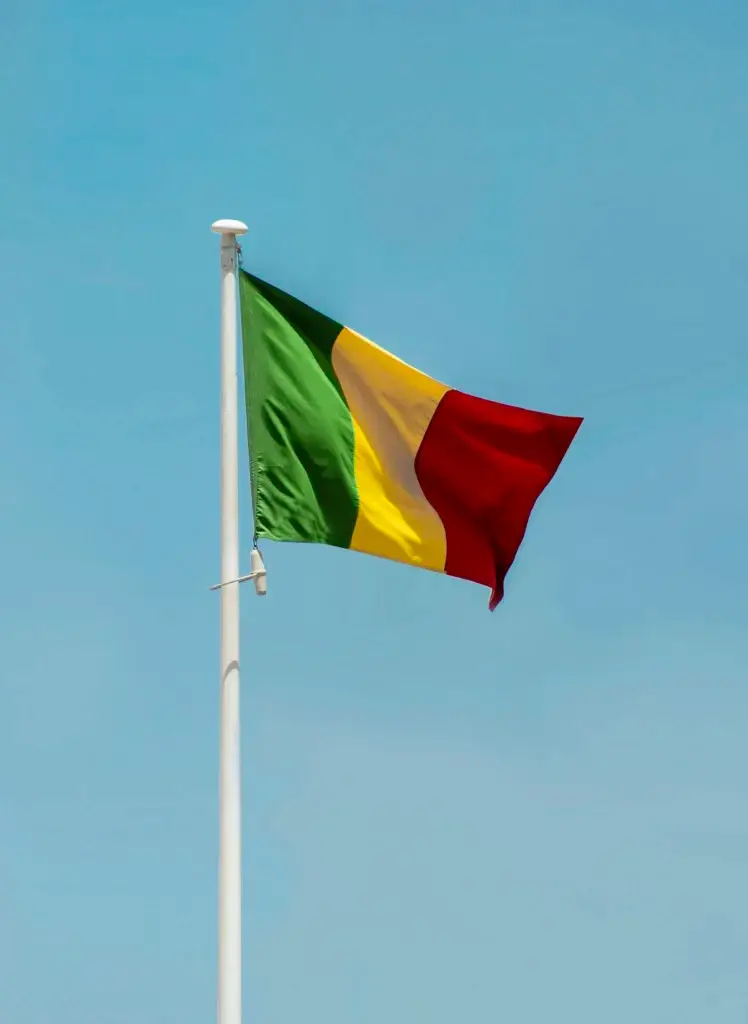
Concentric assesses the coordinated attacks across Mali on April 25 and 26 represented the most serious challenge to the junta’s authority since Gen. Assimi Goïta consolidated power. Jama’at Nusrat al-Islam wal-Muslimin (JNIM), and the Tuareg-led Azawad Liberation Front (FLA), struck Bamako, Kati, Sévaré, Mopti, Gao, Bourem, and Kidal in near-simultaneous operations. The attacks challenged the regime at its political centre and northern periphery, caused the death of Defence Minister Gen. Sadio Camara, and exposed weaknesses in Malian and Russian-backed security capacity. Bamako is unlikely to fall in the near term, but the operating environment is volatile, with elevated risks to aviation, overland movement, foreign personnel, government sites, military facilities, and Russian-linked assets.
Mali’s weekend wave of violence appears to have been a coordinated national offensive intended to demonstrate JNIM and FLA’s operational reach, challenge the junta’s claim to territorial control, and leverage Malian population fatigue with the military government. The near-simultaneous multi-city attack pattern, combined with a drone attack on the presidential palace, suggests months of operational planning. The killing of Defence Minister Gen. Sadio Camara represented the highest-profile targeted killing in Mali in years, removing a key pillar of the junta’s security architecture.
ANALYSIS
Mali has been governed by a military junta since the 2021 coup that brought Gen. Goïta to power. The junta expelled French forces and UN peacekeepers and pivoted toward Russia, deploying the Wagner Group successor Africa Corps and purchasing Russian air defense and aviation assets. These decisions traded Western counterterrorism capacity for regime survival guarantees. The security deal has not stabilized the country.
JNIM, al-Qaeda’s Sahel franchise, has expanded steadily since 2017, establishing control over rural areas, taxation networks, and supply routes across central and northern Mali. The FLA, a Tuareg coalition that briefly held northern territory during the 2012 crisis, has re-emerged as a military actor following the collapse of the Algiers Accord and the junta’s military offensives in Kidal in 2023. Despite their ideological differences, both JNIM and the FLA have demonstrated tactical convergence in targeting shared adversaries, including the Malian Armed Forces and Russian forces.
The April 25 to 26 offensive hit seven cities simultaneously, including Bamako, Kati (location of the main military base), Sévaré (a regional logistics hub), Mopti, Gao, Bourem, and Kidal. The drone strike on Bamako was the first of its kind in the capital, indicating JNIM or FLA have acquired or improvised aerial capabilities. Gen. Sadio Camara’s death at Sévaré, where he was reportedly overseeing counterterrorism operations, removed an architect of the junta’s security strategy.
Russia’s Africa Corps suffered documented losses in the northern engagements. Russian personnel have been deployed in combat roles in Mali since 2021, and their inclusion as targets in the weekend offensive reflects a deliberate escalation in the armed groups’ targeting calculus. Russian military aircraft were reportedly engaged in counterstrike operations, but the spread and depth of the attacks suggest Africa Corps capacity to stabilize the situation is reaching structural limits.
OUTLOOK
Concentric assesses the attacks will not produce a near-term regime collapse. The junta retains sufficient military cohesion, Russian backing, and capital control to absorb the immediate shock. However, the strategic trajectory is negative. The loss of the defence minister, the penetration of the capital’s airspace, and the simultaneous multi-city operations demonstrate a degraded security perimeter, not a contained insurgency.
Aviation across Mali faces elevated risk, particularly for operations involving government-linked or Russian-affiliated assets and any flights into Sévaré, Gao, and Timbuktu airports, all of which saw nearby engagement. Overland movement on the primary routes connecting Bamako to the north and to Mopti faces heightened ambush risk as armed groups exploit the operational tempo. Foreign nationals, particularly those associated with government contracts, mining operations, and development organizations, face increased targeting risk in Bamako and at facilities in the interior.
HOW CONCENTRIC CAN HELP
Concentric offers a suite of services designed to mitigate risks and enable secure business operations in unpredictable environments:
Travel Risk Assessments and Alerting: Concentric’s intelligence team delivers bespoke reports with real-time, itinerary-focused evaluations of geopolitical, security, and infrastructure risks tailored to traveller movements and operating environments, informing security mitigation measures.
Security Operations: Concentric provides on-the-ground advisory support, executive protection, and operational security planning across the Sahel region.
Crisis Management: Concentric’s crisis management teams are trusted by major corporations and remain on hand to support crisis response and provide pre-travel consultancy.
Through Concentric’s advanced geopolitical intelligence capabilities, organisations can navigate travel risks, safeguard personnel, and maintain operational continuity across complex environments. For further information or to arrange a consultation, please contact our Global Intelligence team today.