Concentric is monitoring renewed fighting between Israel and Hezbollah in Lebanon, which is threatening the fragile U.S.–Iran peace process and raising the risk of renewed instability across the Middle East. We are also assessing the growing securitization of artificial intelligence (AI) infrastructure in the United States following the Department of Justice’s intervention in litigation against xAI, a move that may signal increased government support for strategically significant AI projects. Finally, we are tracking political unrest in Colombia following the election victory of a Trump-aligned presidential candidate, where protests in major cities have heightened concerns over domestic stability and the country’s future political direction.
Lebanon Fighting Threatens Fragile U.S.–Iran Peace Process
Renewed fighting between Israel and Hezbollah in Lebanon emerged as the most immediate threat to the recently established U.S.–Iran peace process. On June 21, U.S. and Iranian negotiators resumed talks in Switzerland aimed at implementing the broader ceasefire agreement reached earlier this month and addressing outstanding issues including maritime security in the Strait of Hormuz, sanctions relief, and nuclear monitoring arrangements. However, diplomatic progress was overshadowed by escalating violence in Lebanon, where Israeli operations against Hezbollah and continued cross-border attacks have complicated efforts to stabilize the region. President Trump publicly warned Iran it would face severe consequences if Tehran failed to restrain Hezbollah, while Iranian officials argued continued Israeli military actions in Lebanon undermines the foundations of the ceasefire framework. Iranian negotiators temporarily suspended talks but negotiators reportedly agreed to establish a dedicated communication channel between Washington and Tehran and a separate deconfliction mechanism focused on developments in Lebanon. Despite these measures, significant disagreements remain regarding Hezbollah, Israeli military operations, sanctions relief, and the future of Iran’s nuclear program.
We advise organizations with personnel, operations, or supply chains in the Middle East to closely monitor developments in Lebanon as a key indicator of the durability of the broader U.S.–Iran détente. Companies with exposure to maritime trade, energy markets, and regional transportation networks should maintain contingency plans for renewed instability, particularly if hostilities between Israel and Hezbollah intensify or if negotiations stall.
Justice Department Moves to Shield xAI From Lawsuit Over Data Center Pollution
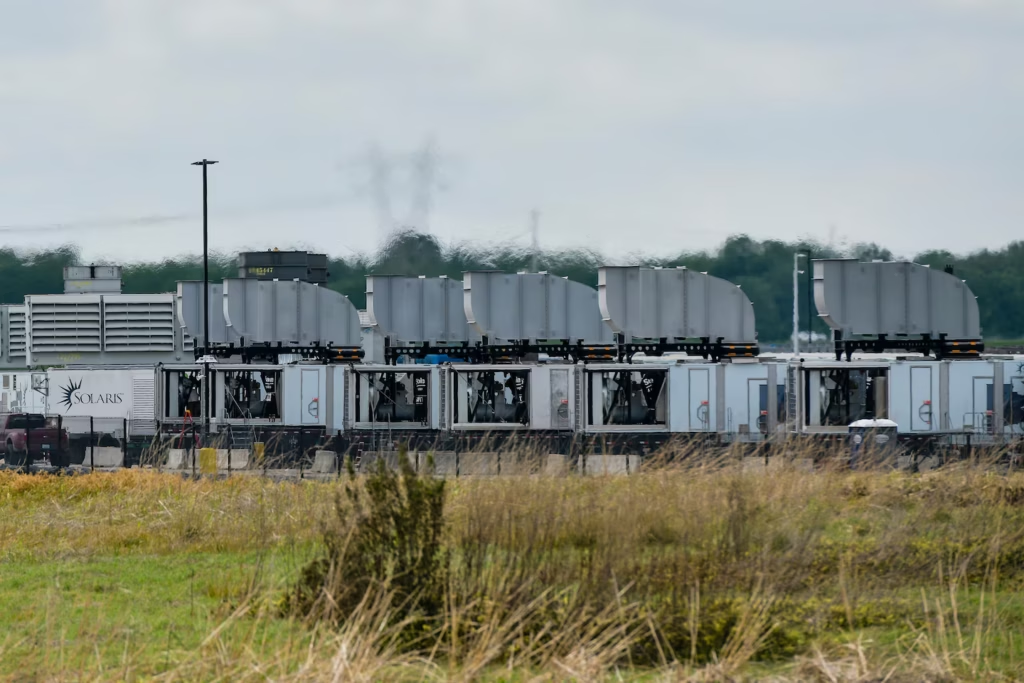
The U.S. Department of Justice has intervened in litigation against xAI, seeking to block or delay a lawsuit alleging the company’s Memphis-based data center violated environmental regulations through the operation of gas-powered turbines used to support its rapidly expanding artificial intelligence infrastructure. Federal officials have argued allowing the lawsuit to proceed could interfere with broader national interests tied to maintaining U.S. leadership in AI and securing the computing capacity required for advanced AI systems. The dispute centers on the balance between accelerating strategic technology development and enforcing environmental and public health regulations, particularly as hyperscale data centers become increasingly important components of national competitiveness. The intervention highlights the extent to which AI infrastructure is now being viewed by policymakers through a national security lens rather than solely as a commercial enterprise.
We advise organizations operating in AI, cloud computing, data center infrastructure, energy generation, and environmental compliance to monitor the outcome of this case closely. The Justice Department’s involvement may signal a broader shift toward granting strategic technology projects greater political and regulatory support where they are viewed as advancing national competitiveness.
Protests Erupt Across Colombia Following Election Victory of Trump-Aligned Candidate
Colombia experienced widespread protests and political unrest following the victory of a conservative presidential candidate widely characterized as politically aligned with President Trump. Demonstrations broke out in major cities after election authorities confirmed the result, with opposition groups alleging democratic backsliding and expressing concerns over the incoming administration’s positions on security, migration, economic policy, and relations with the United States. Supporters of the president-elect celebrated the outcome as a mandate for a tougher approach to crime, drug trafficking, and governance after years of political polarization and deteriorating security conditions in parts of the country. The election represents a significant shift in Colombia’s political direction and is likely to have implications for regional diplomacy, relations with neighboring governments, and cooperation with Washington on security and counternarcotics initiatives.
We advise organizations with personnel, investments, or supply chains in Colombia to closely monitor the evolving political environment and the potential for further demonstrations in major metropolitan areas. Businesses should review continuity plans for operations in major cities and assess how potential policy shifts under the incoming administration could affect regulatory conditions, security cooperation, labor relations, and foreign investment.