Concentric is monitoring the investigation into an alleged terrorist attack aboard a Flydubai flight to Tel Aviv, an incident that exposed an insider threat and will likely bring tighter crew vetting and schedule changes on routes across the Gulf. We are also tracking the escalating conflict in Ethiopia, after explosions in Addis Ababa have raised the risk to personnel in and transiting through the capital. Finally, we are assessing the U.S. military buildup in the Middle East, as a third aircraft carrier strike group heads toward Iran and President Trump signals possible new strikes after the midterm elections, with likely effects on Gulf-based personnel and energy prices.
Flydubai Copilot Accused of Attacking Captain on Tel Aviv Flight
The copilot of Flydubai Flight FZ1073 from Dubai to Tel Aviv allegedly attacked the captain in the cockpit on September 30, sending the aircraft into a steep descent. The Boeing 737 MAX carried 182 people, including eight crew members. Passengers subdued the copilot after the wounded captain opened the cockpit door, and other crew members landed the aircraft in Tabuk, in northwestern Saudi Arabia. A crew member reported a hijacking to air traffic control, but Saudi and Jordanian authorities initially refused to clear the aircraft to land. Saudi Arabia transferred the copilot to the United Arab Emirates after a preliminary investigation with Emirati security teams. Israeli officials identified the suspect as an Omani national who worked for the airline for eight months. Israel and Oman do not have formal diplomatic relations. Israeli agreements with foreign carriers generally bar pilots from countries without diplomatic ties to Israel from flying into the country. Israeli Prime Minister Benjamin Netanyahu said the copilot had undergone radical Islamist indoctrination and described the incident as an attempted terrorist attack. Investigators have not publicly confirmed a motive or identified the weapon used. Flydubai suspended its Israel flights while the investigation continues, and Israel announced it will vet the identities of all pilots flying into the country, including those operating for foreign airlines. Concentric assesses the incident exposes an insider threat that passenger screening does not address. We advise organizations with personnel traveling in the Middle East to expect tighter crew vetting, additional screening, and short-notice schedule changes on routes into Israel and across the Gulf in the coming weeks. Companies should confirm they can quickly locate and support travelers if a flight diverts to a third country.
Explosions Hit Addis Ababa as Ethiopian Conflict Escalates
Three diplomatic sources reported explosions in Addis Ababa overnight on September 30, hours after the national intelligence service banned drone flights over the capital and surrounding areas. A source linked to the Ethiopian Peoples’ Forces Alliance for Survival claimed the coalition carried out several drone strikes in the city, including against the military’s headquarters. The claim has not been independently verified. If confirmed, it would mark the first known drone attack by anti-government forces on the capital. The Tigray People’s Liberation Front and six other armed and opposition groups formed the alliance in September with the stated aim of removing Prime Minister Abiy Ahmed’s government. Fighting that escalated in late September shattered the 2022 peace agreement that ended a two-year civil war. Federal forces have since advanced toward the Tigray regional capital, Mekelle, while the alliance captured towns in neighboring Afar. Tigrayan forces took control of the airports in Mekelle, Axum, and Shire on September 23, and Ethiopian Airlines suspended flights to all three. The government accused Eritrea, Sudan, and Egypt of backing the alliance and expelled 10 Eritrean diplomats, prompting Eritrea to sever diplomatic ties on October 1. The U.S. Department of State advises against all travel to Tigray and Afar and rates Ethiopia as a whole at Level 3, Reconsider Travel. Bole International Airport in Addis Ababa remained operational as of late September. We advise organizations with personnel or operations in Ethiopia to review evacuation and shelter-in-place plans now, while commercial flights from Addis Ababa remain available, and to ensure personnel avoid military and government sites in the capital. We cannot rule out further strikes on Addis Ababa, and organizations using the city as a regional transit point should prepare alternative routings in case flights are disrupted at short notice.
Washington Sends Third Carrier Group Toward Iran as Trump Weighs Post-Midterm Strikes
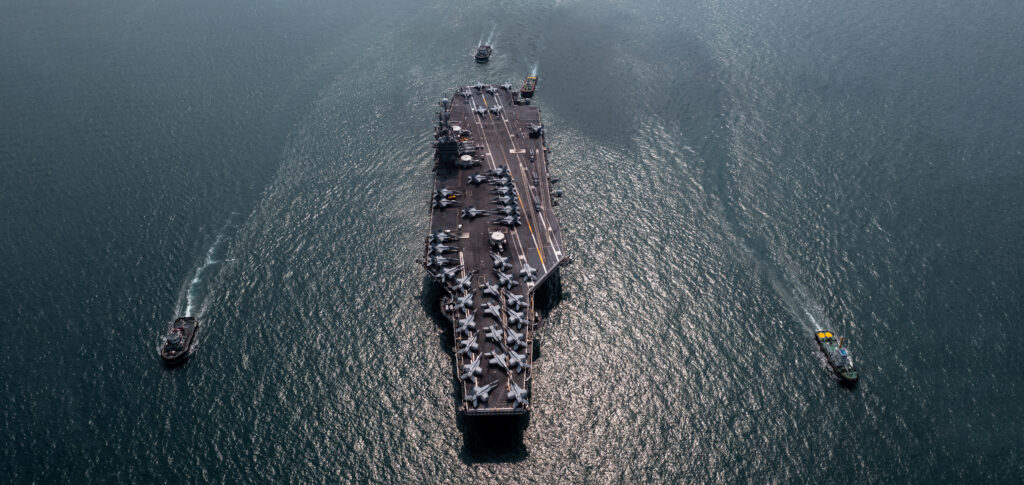
The USS Theodore Roosevelt carrier strike group departed San Diego for the Middle East on September 27, followed a day later by the Makin Island Marine Expeditionary Unit carrying more than 2,000 Marines. The Wall Street Journal reported the deployments could add 9,000 to 10,000 personnel to the roughly 50,000 U.S. troops already in the region. The U.S. official said three aircraft carriers and two amphibious groups will be positioned near Iran by the end of November. In an interview with Time magazine published on October 1, President Trump said it was possible he would intensify the bombing of Iran after the November 3 midterm elections, and Secretary of War Pete Hegseth said U.S. forces are ready should Trump order new attacks. The deployment follows Washington’s rejection of Iran’s seven-day proposal to reopen the Strait of Hormuz. Iranian Foreign Minister Abbas Araghchi responded Tehran was fully prepared to resume the war as iIndirect talks through Qatari mediators continued without a breakthrough. The U.S. Treasury Department sanctioned Iran’s rail and automotive sectors this week. Brent crude traded near $100 per barrel on October 2. We advise organizations with personnel or assets in the Gulf to plan for hostilities to possibly intensify after November 3, and to use the coming weeks to update evacuation, shelter-in-place, and communications plans, particularly for staff near U.S. military facilities and energy infrastructure. Concentric assesses energy prices and Gulf shipping costs will likely remain elevated through the end of the year, and companies with exposure should build sustained volatility into their planning.