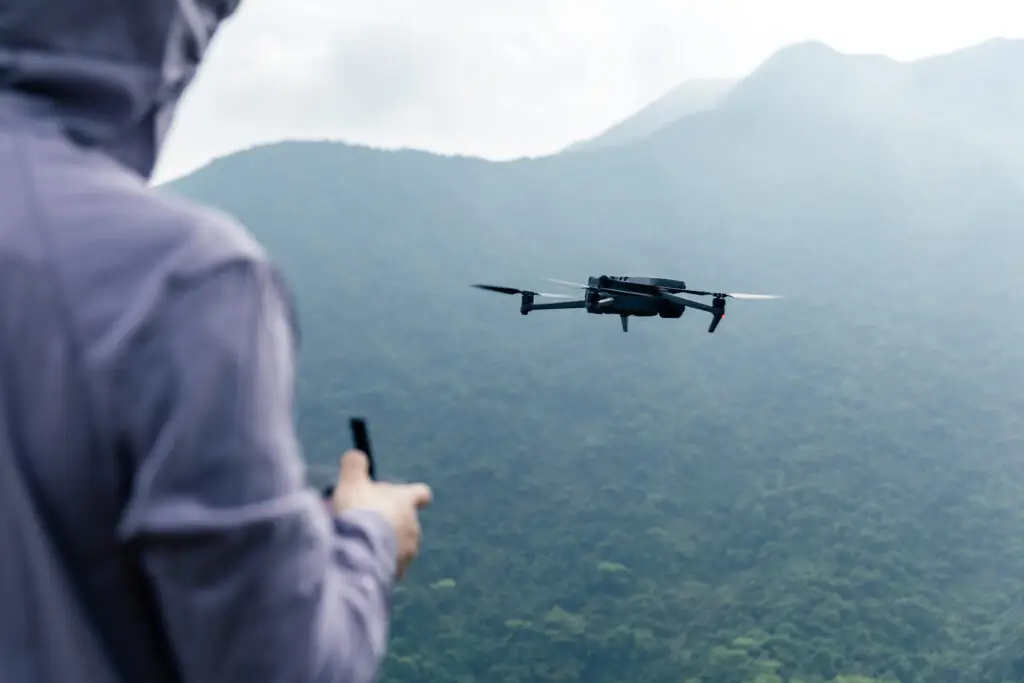
Drones have become a common feature at private events, offering capabilities for photography, media production, and event management. However, their widespread availability has introduced a new category of aerial security threats. As unmanned aerial systems become more capable and difficult to detect, organizations responsible for protecting executives, celebrities, and ultra-high-net-worth individuals must account for the increased risks of surveillance, reconnaissance, privacy breaches, and targeted malicious activity.
The use of unmanned aerial systems (UAS), more commonly known as drones, has expanded dramatically over the past decade. Once reserved primarily for military operations and specialized commercial applications, drones are now readily accessible to hobbyists, photographers, event planners, and media organizations. Advances in battery life, camera quality, autonomous flight capabilities, and affordability have made drones a common fixture at weddings, concerts, sporting events, and other private gatherings. Their ability to capture aerial footage has transformed event photography, while commercial operators increasingly rely on them for security assessments, venue mapping, and live broadcasting. As drone technology continues to evolve, so does the need to consider the security implications of their widespread presence.
Recent high-profile events demonstrated risks associated with drone usage. Taylor Swift has long been the subject of unauthorized aerial surveillance, with drone footage of her Watch Hill, Rhode Island residence frequently appearing online. Days after officiating Swift’s wedding, actor Adam Sandler called police after noticing an unidentified drone hovering over his Nantucket home.The aircraft was later traced to a local photographer, but the incident illustrates the difficulty of identifying drone operators and assessing intent in real time. Whether used by media organizations, hobbyists, paparazzi, or malicious threat actors, drones have the ability to capture detailed imagery and video from beyond traditional physical security perimeters, making it increasingly difficult to maintain privacy at high-profile private events. These incidents highlight the growing challenge of balancing technology accessibility with the need to protect individuals, families, and sensitive locations from unauthorized aerial observation.
For security professionals, drones represent more than a privacy concern, they introduce an entirely new attack vector traditional protective measures are often not designed to address. Unlike individuals attempting to gain physical access to an event, drones can bypass fences, gates, and security checkpoints with relative ease while transmitting real-time video from elevated vantage points. Beyond surveillance, drones can be used to conduct reconnaissance, identify security personnel and response patterns, map venue layouts, or disrupt operations through intentional interference. The increasing availability of autonomous flight features, extended operating ranges, and payload capabilities further expands the spectrum of potential threats, requiring organizations to incorporate aerial risk assessments into event security planning.
These considerations are particularly significant for corporate executives, public figures, and ultra-high-net-worth individuals whose visibility makes them attractive targets for threat actors. Private celebrations, family gatherings, and executive retreats often reveal valuable intelligence on travel patterns, family members’ identities, business associates, residence layouts, and security protocols. As drones become increasingly capable and difficult to detect, executive protection teams must view the air domain as an extension of the physical security environment rather than a separate concern. Effective mitigation strategies, including pre-event aerial threat assessments, counter-UAS planning where legally permissible, coordination with local authorities, and continuous monitoring of surrounding airspace, will become increasingly essential as unmanned systems continue to proliferate. The evolution of drone technology offers remarkable opportunities, but it also demands a corresponding evolution in how organizations protect their most visible and vulnerable individuals.
HOW CONCENTRIC CAN HELP
Given changes in the security landscape, Concentric’s intelligence and security teams are actively monitoring developments, and stand ready to support your organization’s continuity and personnel safety needs. Concentric’s services include:
- Monitoring Online Interactions
Concentric provides Active Monitoring, tracking any mentions of executives, families, or events to alert you of any threats or risks. We deliver real-time alerting aligned to travelers’ live locations and planned movements to support informed decision-making. - Risk Consulting Services
Concentric leverages its team of consultants and intelligence analysts to identify risks and threats facing executives, events, and organizations. We equip our clients with strategic information, and through seamless collaboration with our security operations teams, we offer recommendations that empower our clients to make informed security decisions. Our consulting services range from Site Risk Assessments to Online Sentiment Analysis Reports. - Executive Protection Support
Concentric offers executive-focused security coordination, including advance risk assessments, surveillance/counter-surveillance, drone detection, protective intelligence, secure ground transportation vetting, route planning, and real-time threat monitoring. Our team can scale support in response to heightened volatility or evolving local conditions. - Protecting Personal Information
Eclipse by Concentric™ can remove unwanted personal identifiable information from tracking websites which can be used to target executives, including as you plan upcoming events and travel.
Should conditions escalate or require enhanced support, Concentric remains prepared to assist at short notice.