
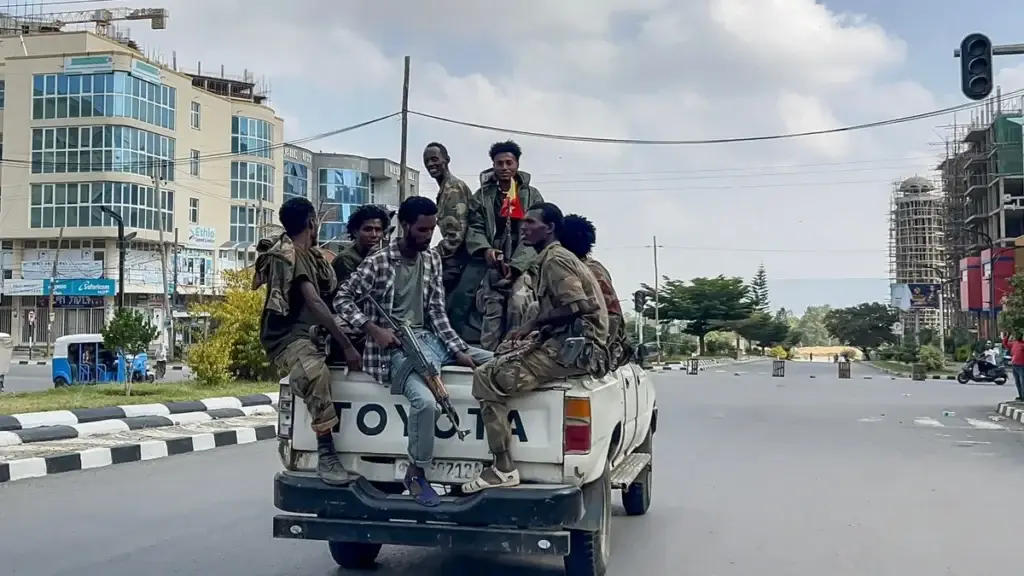
On September 23, after months of rising tension, the Tigray People’s Liberation Front (TPLF) and factions of the anti-government alliance launched offensives across Tigray, Amhara, and Afar. Only three of the alliance’s seven members have joined the fighting, and the TPLF faces internal divisions. Federal forces retook Mekelle, Tigray’s capital, on October 3 after the TPLF withdrew rather than defend the city, a move which likely preserved its forces for a longer fight. Earlier, blasts heard in Addis Ababa overnight on October 1 raised fears the war could impact the capital. Overt Eritrean intervention, following the collapse of diplomatic ties, would mark the most severe escalation. Concentric analysts assess the TPLF will likely sustain an insurgency-style campaign, and fighting will likely continue in Tigray despite federal control of Mekelle.
Analysis
The 2022 Pretoria Agreement ended the last Tigray war but left control of Tigray, disarmament, and the return of displaced people unresolved. The TPLF has since been shut out of national politics. Ethiopia’s election board revoked its registration in May 2025, and Tigray was excluded from the June 2026 election. With no legal route to national power, Concentric analysts assess the TPLF likely sees military force as its main leverage, which reduces the prospect of near-term diplomacy. The party first rebuilt its capacity, retaking Tigray’s regional government this spring before launching a conscription drive. The Alliance for Survival then formalized the goal of overthrowing Prime Minister Abiy Ahmed’s government. On September 23, what appears to be the alliance’s first coordinated offensive spread fighting along Tigray’s boundaries with Amhara and Afar. Launching an offensive just three days after the alliance formed suggests the TPLF hastily sought partners to stretch federal forces across several fronts, but left the alliance little time to integrate.
The Alliance for Survival has shown signs of fragmentation since the fighting escalated. Only three of its seven members are engaged: the TPLF, the Amhara Fano National Movement, and the Afar group Ugugumo, leaving the alliance far weaker on the battlefield than its membership suggests. In Tigray, armed men reportedly detained four veteran commanders who doubted the offensive, including former Tigrayan forces commander Tadesse Werede, suggesting dissent within Tigray’s military leadership is being suppressed rather than resolved. Concentric analysts assess internal TPLF and alliance divisions will likely limit the alliance’s ability to coordinate a nationwide armed campaign. The TPLF’s withdrawal from Mekelle increases the risk the alliance fragments into localized armed groups fighting separately.
Federal forces retook Mekelle without a major battle for the city. After capturing Alamata, where at least 52 people were killed between September 26 and 29, federal and allied Tigray Peace Forces fighters entered Mekelle on October 3. The TPLF said it withdrew to spare the city from bombardment and would continue the fight from elsewhere, signaling a probable shift from holding territory to mobile resistance. The withdrawal likely preserved much of the TPLF’s fighting strength, echoing 2020, when federal forces took Mekelle but Tigrayan forces recaptured it seven months later.
Even as federal forces closed in on Mekelle, explosions were heard in Addis Ababa overnight on October 1, including near the army’s headquarters. The explosions came hours after security services imposed an indefinite drone ban, an alliance-linked source claimed drone strikes, but the claim remains unverified. If confirmed, strikes on the capital would mark the alliance’s most direct attempt yet to bring the war to the center of federal power. They would also show the alliance can reach targets far from the front lines, widening the conflict’s scope. The explosions will likely lead to more checkpoints, surveillance, and detentions while authorities investigate but are unlikely to halt business activity or commercial flights in the capital, absent further escalation.
Regional Dimension
Regional rivalries make de-escalation harder. Ethiopia’s army chief has accused Eritrea, Sudan, and Egypt of backing the rebels, an accusation all three deny. On October 4, the leaders of those three countries and Somalia issued a joint declaration insisting Red Sea control remain with coastal states, an apparent rebuff to Ethiopia’s push for sea access. Concentric analysts assess the declaration signals a regional bloc increasingly at odds with Addis Ababa, likely reinforcing the government’s view that the rebellion is externally backed.
- Eritrea’s alleged support for the TPLF complicates the conflict. Its troops fought alongside federal forces against the TPLF in the last war, but relations collapsed after Eritrea was sidelined in the Pretoria talks and Ethiopia pressed for sovereign access to the Red Sea. Despite rising tensions, the United States lifted sanctions on Eritrea’s military and ruling party on September 18, citing U.S. regional interests. On October 1, the same day as the explosions in Addis Ababa, the dispute became a diplomatic rupture. Ethiopia expelled ten Eritrean diplomats and announced it would close its embassy in Asmara, and Eritrea responded by severing all diplomatic ties. Concentric analysts assess the rupture removes a key channel for managing cross-border incidents. The rupture, combined with U.S. sanctions relief which may ease Eritrea’s access to weapons, likely raises the risk of direct confrontation between the two states.
- Sudan adds another risk. Its army has fought the paramilitary Rapid Support Forces since 2023. The International Crisis Group reported Sudan’s army hosted thousands of Tigrayan fighters and Ethiopia’s government allegedly let the Rapid Support Forces operate from its territory. Concentric analysts assess both wars remain domestic conflicts, but the links between them are growing.
How Concentric Can Help
Concentric’s intelligence and security teams are monitoring developments and stand ready to support your organization:
- Crisis Management Planning: Develop or update a crisis management plan setting out escalation triggers, required actions, decision-makers, and key stakeholders. Concentric’s crisis management team can support the development of internal plans.
- Personnel Preparedness: Ensure staff know emergency communication procedures, shelter-in-place protocols, muster points, and escalation triggers following nearby military operations, communications shutdowns, sudden road closures, or staff detentions.
- Protective Intelligence Monitoring: Track conflict developments and use defined indicators to guide travel restrictions, site closures, and temporary relocations. Concentric’s intelligence team can provide real-time monitoring and security alerts.
- Security Coordination: Maintain regular contact with trusted local partners, security providers, and diplomatic representatives for timely updates on fighting, political developments, and movement conditions.
For more information, please reach out to Concentric’s Global Intelligence team.