Concentric is monitoring the situation in the Strait of Hormuz following a round of strikes between the United States and Iran, the first since July. We are also tracking updates in Venezuela, as President Donald Trump announced an agreement with Caracas granting the United States majority control of more than 65 billion barrels of proven oil reserves. Finally, we are assessing the fallout from catastrophic flooding along the Trishuli Valley on the Nepal-China border, which has killed nearly 100 people, with nearly 4,000 still missing.
U.S. Strikes Iranian Launchers in Hormuz, Sparking Regional Airbase Reprisals
U.S. forces struck two rocket launchers on Larak Island in the Strait of Hormuz on August 30, killing two people and injuring two others in what is the first known U.S. attack on Iran since President Trump paused a renewed campaign in late July. U.S. officials said Islamic Revolutionary Guard Corps (IRGC) personnel had been observed preparing to fire rockets carrying sea mines into the waterway. U.S. Central Command officials called the operation a limited and precise action against minelaying forces posed an imminent threat. Trump warned Tehran the week prior that any vessel deploying new mines would be destroyed. The IRGC vowed a response and struck the U.S.-operated King Hussein and al-Azraq airbases in Jordan with ballistic missiles early on August 31, eight of which the Jordanian army intercepted. President Pezeshkian said Iran is not seeking war but will deliver a decisive response to aggressors, and Iran’s foreign ministry characterized the Jordan strikes as legitimate defense. Iranian state television separately claimed a drone attack on a United Arab Emirates air base and the IRGC warned vessels violating its passage rules would meet the same outcome. We advise organizations with exposure to Gulf shipping routes, oil markets, or regional supply chains to treat the strait as closed rather than conditionally passable. A laden vessel struck mines while operating within Iran’s own inspection regime at Larak, meaning compliance no longer secures safe passage and businesses should hold existing contingency and freight-routing plans in place.
U.S. Secures Century-Long Concession Over Venezuelan Oil Reserves
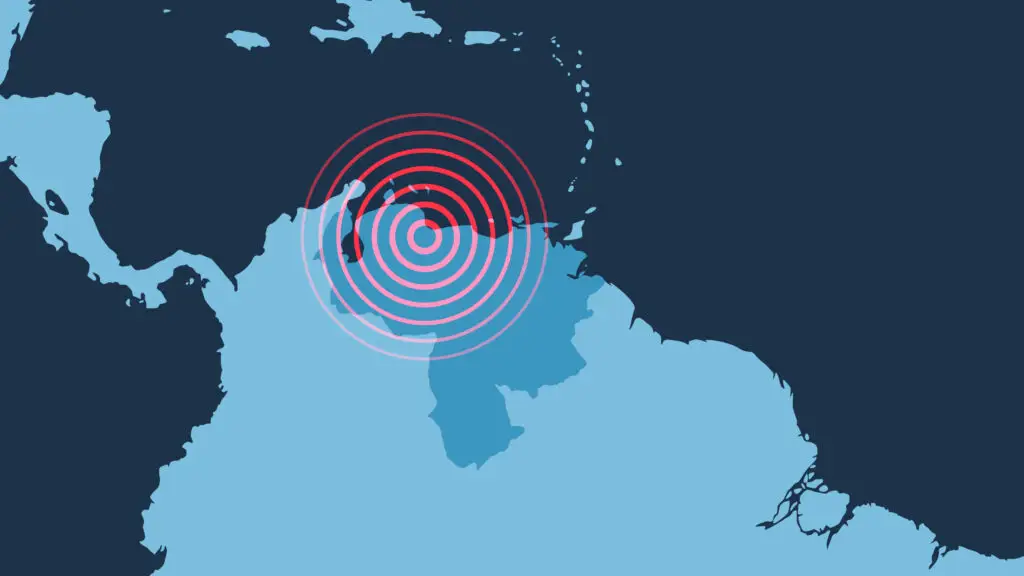
President Trump announced on August 28 an agreement granting the United States majority control of more than 65 billion barrels of proven Venezuelan oil reserves. A U.S. official described the arrangement as a 100-year concession issued by interim President Delcy Rodríguez to a joint venture between the U.S. government and a private operator, negotiated through the Departments of Defense and State. U.S. Department of State (DoS) Secretary of State Marco Rubio said the deal would bring close to 100 billion dollars in private investment and support reconstruction of the Venezuelan economy. Rodríguez confirmed the deal publicly the same day. Output is intended in part to replenish the Strategic Petroleum Reserve, now at a 40-year low, and to supply the U.S. military. The concession gives the U.S. a stake in 17 Venezuelan oil fields and an ownership share of production, in exchange for which Caracas would receive more than $100 billion in investment, more than $209 billion in taxes, and increased oil revenue, with American and other private firms developing the fields. Venezuela holds the largest proven reserves in the world but produces roughly one percent of global supply, due to degraded infrastructure following two decades of underinvestment under the Chávez and Maduro regimes. The agreement follows the January 3 U.S. military operation that captured Nicolás Maduro, subsequent reform of Venezuelan hydrocarbons law permitting private management of extraction, and the U.S. Treasury’s easing of sanctions on the sector. Two U.S. firms moved ahead of the announcement, with Hunt Oil concluding an agreement with PDVSA earlier in August and SLB signing a contract during the week of August 17 granting access to Venezuelan oilfield data. We advise organizations with existing or prospective exposure to Venezuela’s energy sector to treat the regime’s survival as the central risk, as the concession could be voided if the government changes. Businesses should structure any commitments to ensure capital remains recoverable if regime change occurs. Companies should also confirm theirOFAC authorizations are current rather than relying on public policy statements, given repeated shifts in U.S. sanctions posture on Venezuela over the past 18 months.
Nearly 1,000 Killed as Nepal’s Trishuli Valley Flooded by Tibetan Glacier Collapse
A glacier collapsed above the Lhende river in Tibet on the morning of August 26, sending more than 100 million cubic meters of ice, rock, and mud down a 72-kilometer stretch of Nepal’s Trishuli river, according to U.S. Geological Survey estimates. The flow tore through settlements in Rasuwa, Nuwakot, and Dhading and destroyed the Gyirong Port complex, the principal overland trade and tourism crossing between China and Nepal, along with roughly 42 kilometers of road and 19 bridges. Access to significant portions of the affected zone is now only viable by helicopter travel. As of August 31, 939 people are confirmed to have died, while a further roughly 4,000 are missing across Nepal and China. More than 900 of the missing are hydropower project workers, concentrated at sites along the valley floor, while 592 are foreign nationals. Chinese authorities warned on August 27 that a barrier lake of two million cubic meters had formed near the confluence of the Chhochen Khola and Purepu Tsangpo rivers, and it overflowed the following day, forcing a suspension of cross-border rescue operations. Nepali officials requested specialized support for tunnel rescue, survivor detection, forensic analysis, and morgue refrigeration, and an 11-member Indian reconnaissance team deployed on August 29 with a Chinese team to follow. Officials buried nearly 200 unidentified bodies as freezer capacity ran low. The Red Cross estimated on August 28 that 90,000 people had been affected, and DoS raised its humanitarian commitment to 3.6 million dollars on August 29. We advise organizations with personnel, contractors, or operations in Nepal and the Nepal-China border region to maintain heightened awareness and regularly reassess exposure to flood and landslide activity along affected river corridors. We also urge businesses and travelers to avoid non-essential movement through the region while barrier lakes remain unstable, and to ensure contingency arrangements are in place for disruption to road access, communications, and cross-border trade routes.