
KEY INSIGHTS
Africa’s youthful societies are increasingly at odds with aging, entrenched rulers, making succession a key source of political fragility. Highly personalized regimes and weak institutions amplify risks of disorderly transitions, elite rivalries, and even military intervention. States with stronger democratic frameworks may manage leadership change more smoothly, yet several countries face heightened instability as aging leaders resist ceding power or attempt to engineer succession in favor of family members or loyalists.
ANALYSIS
Africa is the world’s demographically youngest continent, with 70 percent of sub-Saharan Africa under the age of 30, yet governance in several nations remains dominated by aging men. This mismatch between youthful societies and aging rulers is forecasted to become an increasing structural source of fragility. In addition, many of Africa’s longest-serving leaders have held power for more than three decades, often by amending constitutions and suppressing opposition.
In Africa, states led by aging rulers and sustained by fragile institutions face heightened risks of disorderly transitions. The absence of credible succession planning encourages rival elites to maneuver early, paralyzing governance, and undermining legitimacy. We assess there are two key challenges with this leadership structure: civil unrest/societal pressures and elite fragmentation and coups.
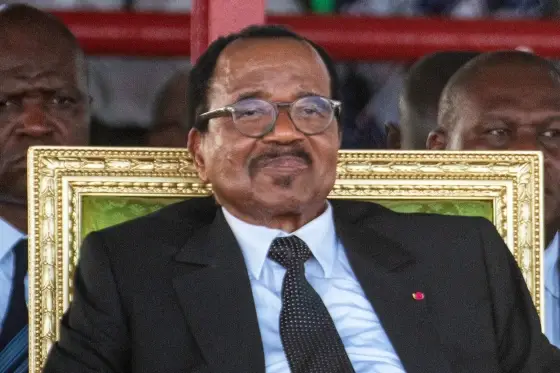
Risks of instability are most acute in nations where aging leaders have also ruled for extended periods. Cameroon (Paul Biya), Equatorial Guinea (Teodoro Obiang), and Congo (Denis Sassou Nguesso) have each cultivated deeply personalist regimes. Uganda (Yoweri Museveni): Museveni’s preparation of his son as successor risks inflaming civil unrest. Zimbabwe (Emmerson Mnangagwa): Mnangagwa’s plan for a controlled succession produces vulnerabilities due to factional divides within ZANU-PF.
CASE STUDIES
Sudan, 2019 Transition Crisis: After 30 years in power, President Omar al-Bashir was ousted by the military in April 2019 following months of protests. Following the coup, over 120 protesters were killed and over 900 were injured. Internet shutdowns lasted over a month, as well as transport blockades and widespread disruption to banking and logistics. The fragile transition later collapsed into the 2023 civil war.
Guinea, 2008 Death in Office: President Lansana Conté died in December 2008 after 24 years in power. Guinea’s military seized power within hours. Security forces killed over 150 pro democracy protesters. Mining contracts were suspended or renegotiated, and foreign investment stalled amid sanctions and political paralysis.
RECOMMENDATIONS
- Political Risk Monitoring: Maintain geopolitical risk monitoring services regularly tracking developments in leadership health, succession manoeuvres, and protest activity.
- Travel and Staff Safety: Consider restricting staff movement during sensitive political periods.
- Local Security and Partnerships: Vet reliable security and logistics providers in advance, ensuring redundancy to guarantee support during instability.
- Crisis Management Planning: Work with security experts to ensure business continuity plans are in place and well communicated throughout the corporation.
- Insurance Safeguards: Review coverage for corporate political violence insurance, ensuring security evacuation support.
Authored by: Oliver Maund