KEY INSIGHTS
The July 29 drone strike on the U.S.-owned floating storage and regasification unit (FSRU) Energos Winter at Damietta port, Egypt, was the first confirmed attack on Egyptian territory during the current conflict. It followed the collapse of the June U.S.-Iran ceasefire, renewed U.S. strikes on Iran, and attacks by Iran-aligned groups against Saudi energy infrastructure and extended the war’s direct physical effects from the Gulf and Red Sea to the eastern Mediterranean. Concentric assesses the incident was likely a deliberate targeted attack and reflects a potential shift from confrontation around the Strait of Hormuz toward a distributed campaign against U.S.-linked assets, regional energy infrastructure. Attribution for the attack remains unconfirmed, however, the timing of the incident, amid continued U.S. and Iranian escalation, and the targeting of a U.S. asset result in a credible link to the ongoing Middle East conflict.
KEY EVENTS
- July 30: Egypt’s Cabinet confirmed initial investigations identified a drone as the cause of the damage on vessels at Damietta port. No organization or government claimed responsibility
- July 29: A drone struck the floating storage unit Energos Winter at Damietta port. The resulting fire spread to the nearby liquefied natural gas (LNG) carrier GasLog Salem. Authorities evacuated the crews, contained the fire, and reported no fatalities or injuries.
- July 27: Saudi Arabian air defenses intercepted several drones launched from Iraqi territory by Iran-aligned militias targeting Saudi energy infrastructure.
- July 7: U.S. Central Command resumed large-scale strikes against Iran after Iranian attacks on commercial vessels in the Strait of Hormuz. U.S. forces struck more than 80 Iranian military targets, including coastal radar, air-defense, missile, drone, and command infrastructure.
- June 17: The U.S. and Iran signed the Islamabad Memorandum, establishing an immediate ceasefire, reopening the Strait of Hormuz, and creating a 60-day window for negotiations on a final settlement.
ANALYSIS
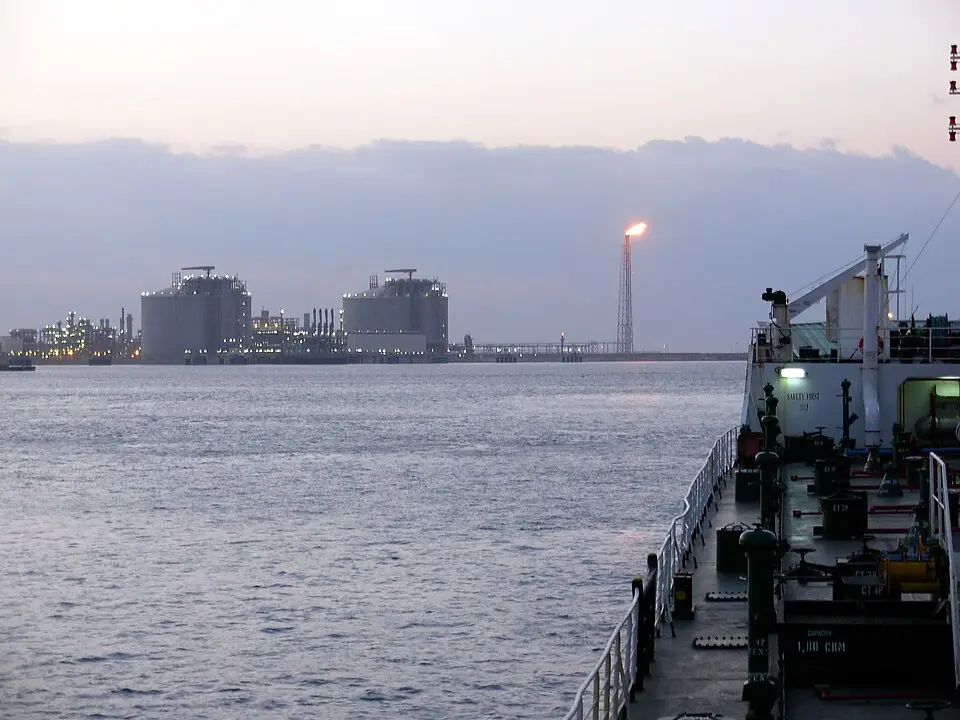
On July 29, a drone struck the U.S.-owned FSRU Energos Winter while it was berthed at Damietta port on Egypt’s Mediterranean coast. The impact triggered a fire aboard the vessel, which spread to the nearby liquid natural gas (LNG) carrier GasLog Salem. Egyptian emergency teams contained the blaze, and authorities reported no casualties. On July 30, Egypt’s Cabinet confirmed preliminary investigations identified a drone as the cause, although no government or armed group claimed responsibility. Energos Infrastructure identified the Energos Winter as part of its U.S.-owned fleet.
Since the resumption of hostilities between the U.S. and Iran, Iranian proxies and aligned groups have expanded the geographic area of operations.
- July 27: Iranian-aligned militias in Iraq launched 30 drone attacks against U.S. forces and energy infrastructure in Saudi Arabia.
- July 20: The Houthis announced a naval blockade against Saudi Arabia, a key U.S. regional ally, threatening vessels associated with the Kingdom and preventing access to Red Sea ports. The Houthis claimed attacks against Saudi tankers in the Red Sea. These actions increased the risk to the Bab el-Mandeb Strait as Iran continued to contest shipping through the Strait of Hormuz.
The Damietta incident potentially extends this targeting pattern to Egypt and the Mediterranean coast. While Egypt has experienced the economic and diplomatic effects of the conflict, it previously avoided direct attacks. We assess the strike likely targeted the U.S.-owned asset rather than Egypt itself, extending the conflict’s geographic reach beyond its previous limits. The attack on the Energos Winter enabled the threat actor to impose additional economic costs on the United States without directly targeting U.S. military installations, while also demonstrating U.S.-owned commercial assets remain vulnerable beyond the Gulf.
As of report writing, no entity has claimed credit for the attack. Egyptian authorities have not released details on the drone’s model, flight path, launch location, or operator. The strike occurred during renewed U.S.-Iran hostilities and targeted a U.S.-owned energy asset one day after U.S. and Saudi forces struck Iran-aligned groups in Iraq. Concentric assesses these factors establish a credible link to the wider conflict but does not confirm Iran directed or conducted the attack.
We assess Cairo will likely avoid public attribution for the attack without overwhelming evidence indicating a specific actor. Accusations could draw Egypt into the conflict, reduce its ability to act as a diplomatic intermediary, and undermine confidence in Egyptian ports among shipping operators. The Egyptian government will be acutely aware of the impact kinetic attacks could have on Suez canal revenue. If vessel operators assess a credible threat exists to ships calling Egyptian ports, terminals, or transiting the canal, traffic could divert around the Cape of Good Hope. The Houthi campaign demonstrated how perceived risk can reduce canal traffic and revenue. Egypt’s State Information Service reported, Suez Canal revenue fell 61 percent in 2024, from $10.25 billion in 2023 to $3.991 billion, after shipping companies diverted vessels away from the Red Sea.
OUTLOOK
Concentric assesses Egypt will likely treat the Damietta strike as a warning the conflict can extend to Egyptian territory and U.S.-linked commercial assets on the Mediterranean coast. Cairo will almost certainly increase counter-drone coverage, maritime patrols, and surveillance around Damietta, Port Said, Alexandria, the Suez Canal, and major Red Sea ports.
Further attacks in Egypt remain possible but are not imminently likely. We assess the most likely near-term outcome is enhanced security around ports and critical infrastructure, supported by a cautious investigation and limited public attribution. Cairo will probably avoid accusing Iran or an Iran-aligned group unless investigators recover technical evidence identifying the drone’s origin or operator. Egypt has a strong interest in deterring further attacks while preserving its diplomatic role and avoiding direct involvement in the U.S.-Iran conflict.
Should additional attacks target Egyptian territory or critical infrastructure, we assess it would indicate a deliberate geographic expansion of the conflict. Such a development would increase the probability of Egyptian military involvement, closer operational coordination with the United States, and a broader regional effort to protect Mediterranean energy infrastructure.
The main economic risk for Egypt is a decline in commercial confidence. Shipping companies may divert vessels if they assess that port approaches, anchorages, or energy terminals are exposed to drones. Widespread re-routing would likely cause global inflationary pressures caused by extended shipping times and increased transport costs.
RECOMMENDATIONS
We advise organizations with personnel, assets, shipping exposure, or supply-chain dependencies in Egypt and the eastern Mediterranean to consider the following measures:
- Review Insurance Coverage: Confirm war-risk, political violence, cargo, business interruption, and marine insurance remain valid for operations near Egyptian ports and the Suez Canal. Organizations should clarify notification requirements and exclusions related to drone strikes or regional conflict.
- Strengthen Energy Continuity Planning: Organizations dependent on Egyptian gas or electricity supplies should assess exposure to short-term import disruption and confirm backup generation, fuel reserves, and alternative supply arrangements.
- Protect Personnel: Companies should ensure staff understand emergency communications, shelter-in-place procedures, muster locations, and movement restrictions near ports, military sites, and energy infrastructure.
- Reassess Port and Maritime Exposure: Review planned calls at Damietta, Port Said, Alexandria, and Suez. Identify alternative ports and routing options in case authorities impose temporary closures, exclusion zones, or enhanced security checks.